
– by Shuvai M Shumba, BCJ, 5th Semester
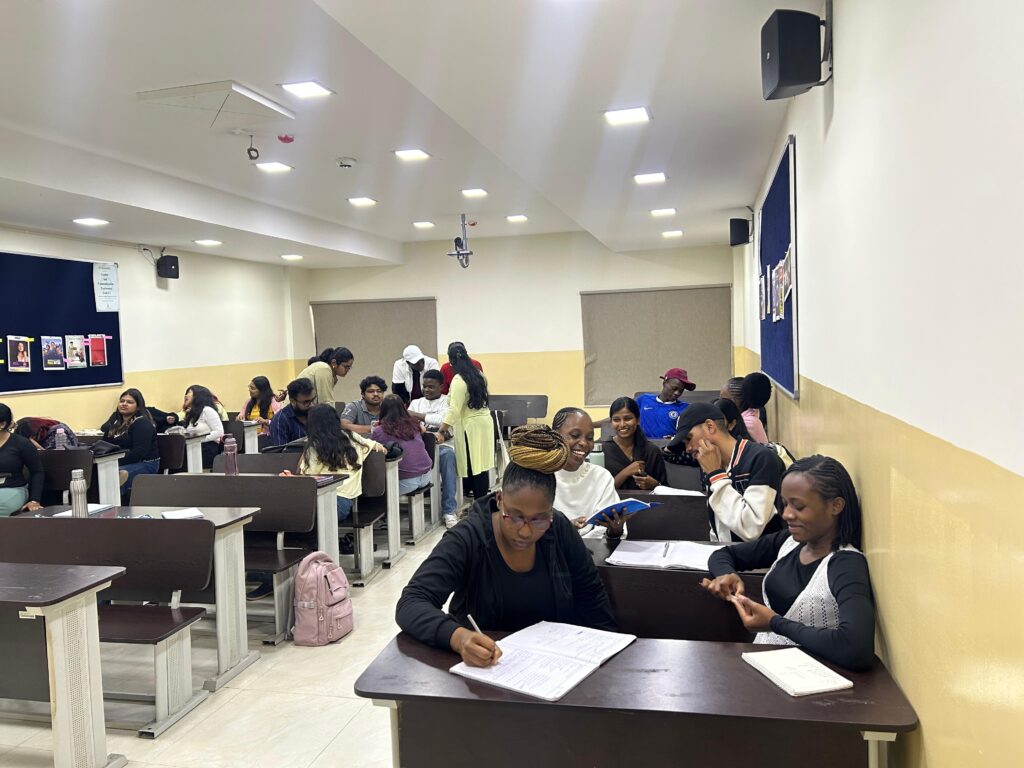
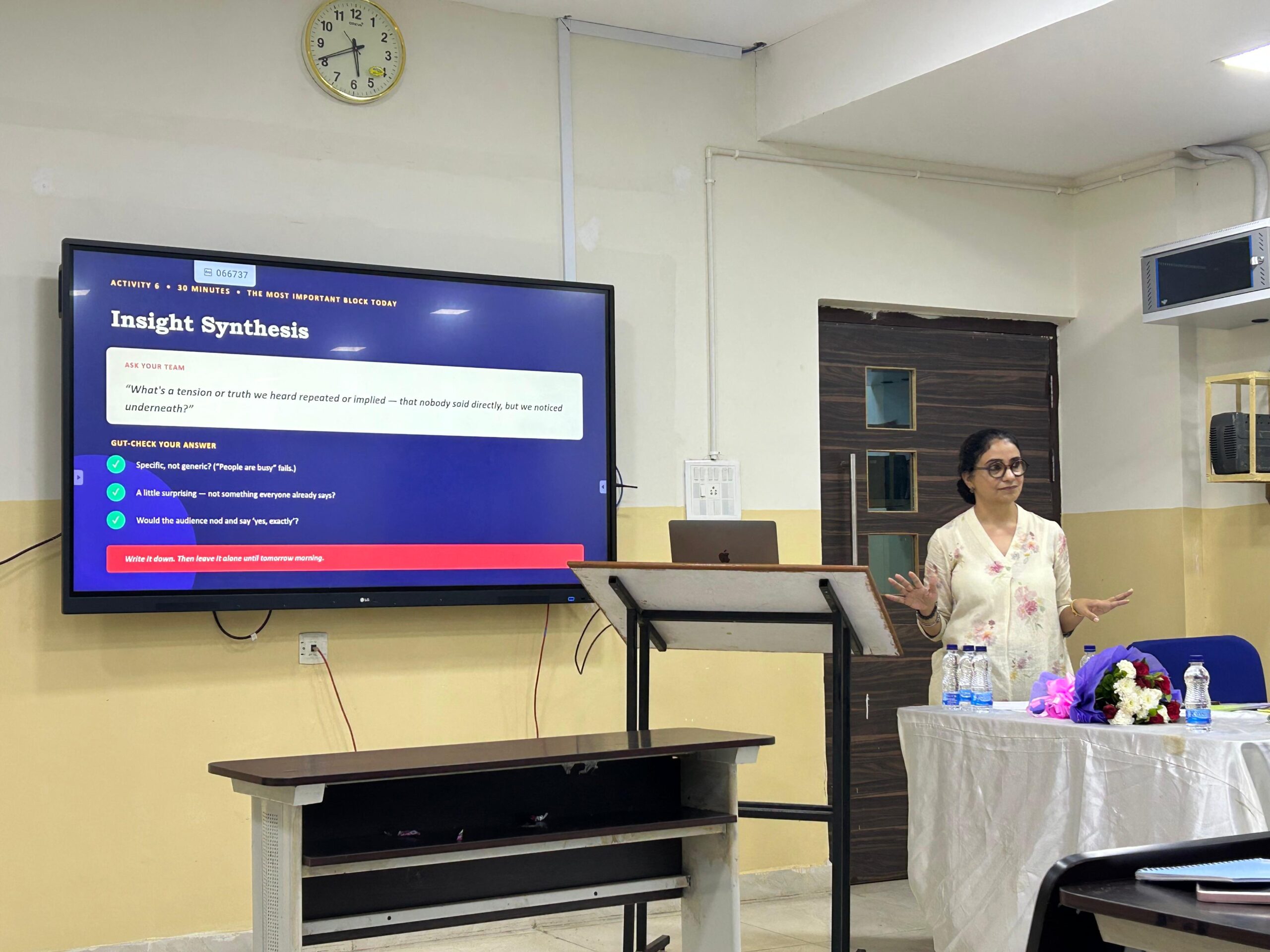
The School of Mass Communication (KSMC) hosted a two-day advertising and brand strategy workshop titled, “Creativity: To Be or Not to Be?”, on 2nd and 3rd of September for 5th-semester Bachelor of Communication and Journalism (BCJ) students. The workshop was facilitated by Ms. Ravpreet Ganesh, Group Chief Strategy Officer at ZIEL Network, and aimed to give students practical exposure to advertising strategy and creative execution.
Over the two days, students explored the different stages of developing an advertising campaign. Day 1 focused on auditing global brands, understanding consumer insights, and synthesising findings into strategic directions. On Day 2, students applied these learnings through concept development, strategic brief creation, and the execution of campaign ideas. The workshop provided students with an opportunity to connect classroom learning with real-world advertising and brand strategy practices.
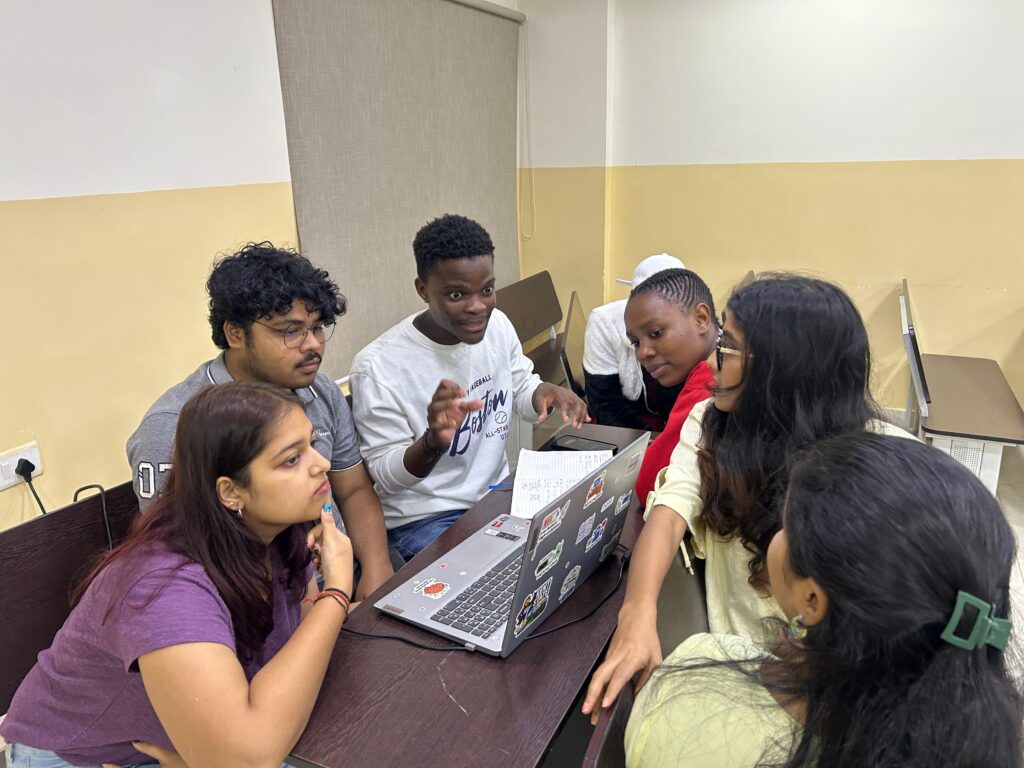
Students were introduced to the core frameworks of brand strategy through comprehensive audits of three global industry icons: Red Bull, Decathlon, and Calvin Klein Fragrances. Students worked in teams to categorize each brand’s operating market and identify its specific target audience, while mapping out unique behavioral drivers and consumer demographics. The analysis required students to articulate each brand’s core positioning statement such as Red Bull’s energy-driven promise or Decathlon’s commitment to democratizing sports gear. By examining the brands’ visual identity, tone of voice, and evidence of market equity, students recommended one strategic change to improve their market reach. Following the brand audits, students engaged in a structured Insight Synthesis exercise on Day 1 designed to uncover hidden consumer realities.
The second day shifted focus from foundational strategy to concept development and creative execution, with Ms. Ganesh challenging the common myth that creative ability is an innate, passive talent. Reframing creativity as a disciplined daily practice, she emphasized that talent serves merely as a baseline while true impact stems from continuous attention and structured effort. Building directly on the consumer insights analyzed on Day 1, student teams moved into full Concept Development by constructing strategic creative briefs. These briefs clearly outlined the business objective, target audience, consumer insight, single-minded proposition, and brand tone. To bring their strategic concepts to life, teams selected one of three execution formats including: designing a print advertisement featuring a key visual, one high-impact headline, and minimal body copy; or scripting a 30-second film using a six-panel storyboard mapped through setup, tension, and resolution.
This helped the students understand the full advertising process, from studying a brand to creating the final advertisement. Students learned how to analyse a brand, find hidden consumer needs and feelings, and create clear creative briefs. These are skills commonly used in advertising agencies. They also learned how to turn these ideas into print ads or film storyboards. By the end of the workshop, students had a clear understanding of how to turn real consumer problems and needs into creative and effective advertising campaigns.