

Carroline Anesu Makoni, 4th Sem MCJ
Friendship, partnership, situationship, ‘ a thing’-ship, everyone is in a ship, few are in a meaningful relationship, which is the backbone that human society has thrived on for centuries. How did we get here? I would like to point to modern days dating love child : Insta-love. We now meet instantly, date instantly and fall out instantly. Let’s talk about it.
Traditionally, the diagram of a relationship was linear. Boy meets girl, boy courts, girl, Girl agrees, they date, they fall in love and they get married. Modern dating is characterised by ‘stages’ and most potential relationships die in the ‘talking stage’. Should they make it out of that stage the connection is plagued by: ‘No label’, we are… just ‘talking’, we are a ‘thing’, we are… ‘kind of together’. What does that even mean? Eventually they get back on those apps to try it all again. It is a vicious cycle because now the diagram is circular.
The way we approach dating has undergone a radical transformation. Whether this transformation is good or bad, depends entirely on one’s experience. One thing is certain; gone are the days of chance encounters and slow-burn romances and letter writing. Instead, we find ourselves in an era defined by “Insta-love,” where connections can spark in an instant (and fizzle out just as quickly), often facilitated by dating apps and social media platforms. This new paradigm of romance brings both exciting opportunities and unique- perhaps even devastating-challenges. It is the survival of the fittest out there and it is crucial that one understands this instant love modern dating scenario in order to navigate its complexities with grace.
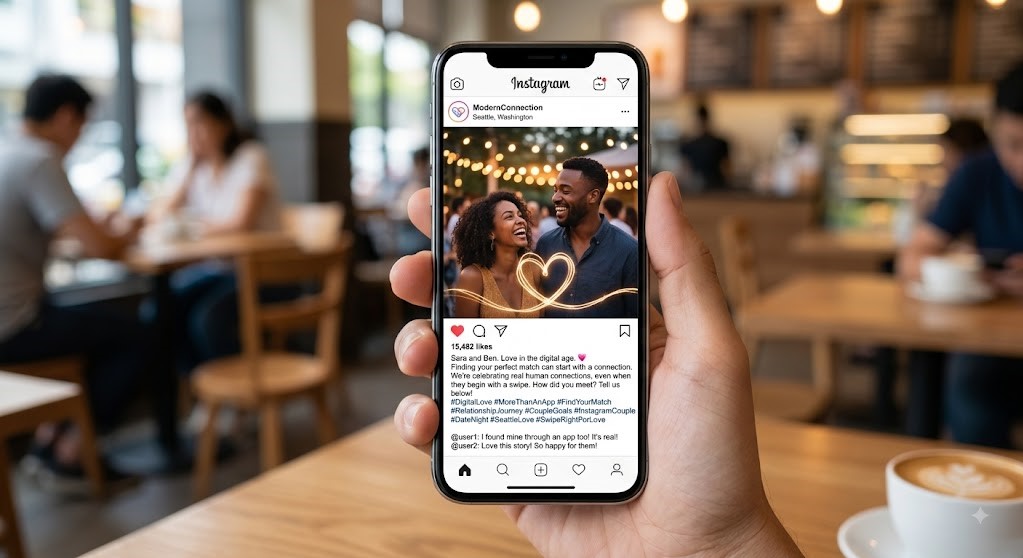
The rise of dating apps has made finding love as easy as a swipe on a screen – or so we think. Undoubtedly one of the most significant advantages of this digital dating landscape is the sheer convenience it offers. You can connect with potential partners from the comfort of your home, view their profiles, and chat before deciding to meet in person. The visual nature of social media allows users to present themselves in a way that highlights their interests and experiences. A well-curated Instagram profile can reflect a person’s personality, values, and lifestyle, making it easier to attract like-minded individuals. Easy peasy right? So why Insta-love is failing?
First, the phenomenon of “swipe culture”: This leads to superficial interactions, social media users focus more on physical appearances than on emotional compatibility. We struggle to form meaningful connections through dating apps, often leading to a cycle of endless swiping and fleeting conversations that fizzle out before a real bond can form. The nature of online interaction can foster a sense of anonymity that leads to behaviors like ghosting. Dating feel like a game, diminishing the emotional investment that is crucial for building lasting relationships.
Second, the “perfect image” pandemic: Social media often promotes unrealistic standards of beauty, lifestyle, and romance, causing us to modify our profiles or behavior in ways that don’t align with our true selves. This can lead to a disconnect when transitioning from online interactions to real-life meetings, where the polished persona may not match reality. Love is intended to be a little messy, a little risky, maybe a little ugly. Where did this perfection frenzy come from?
Third, ineffective communication: With the ease of texting and messaging and reluctance to talk face-to-face, it’s easy to misinterpret intentions or emotions. Clear communication about your feelings, expectations, and boundaries can help mitigate misunderstandings. Whether you’re looking for a casual fling or a serious relationship, being upfront can save both parties time and emotional energy.
In summary, a plethora of issues plague insta-love and the ones mentioned above are merely a slice of the cake. Perhaps the solution could be to put our apps away and grab a coffee. A true connection might be a mere walk away!