– by Calvin T. Mhlanga, BCJ, 5th Semester
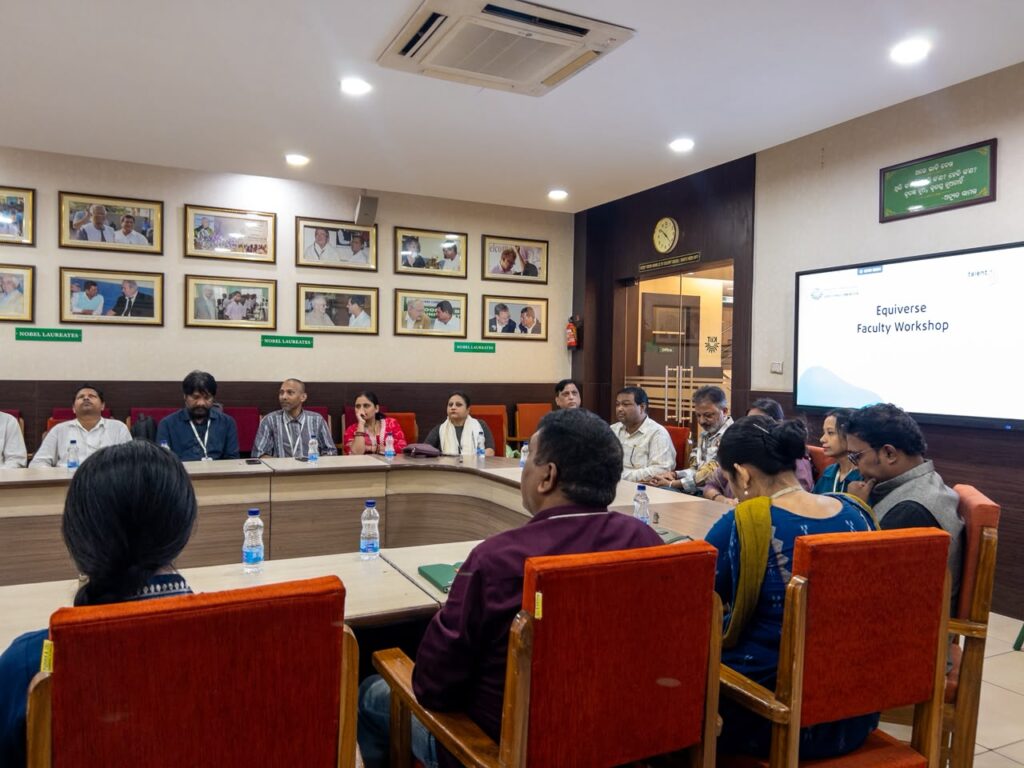
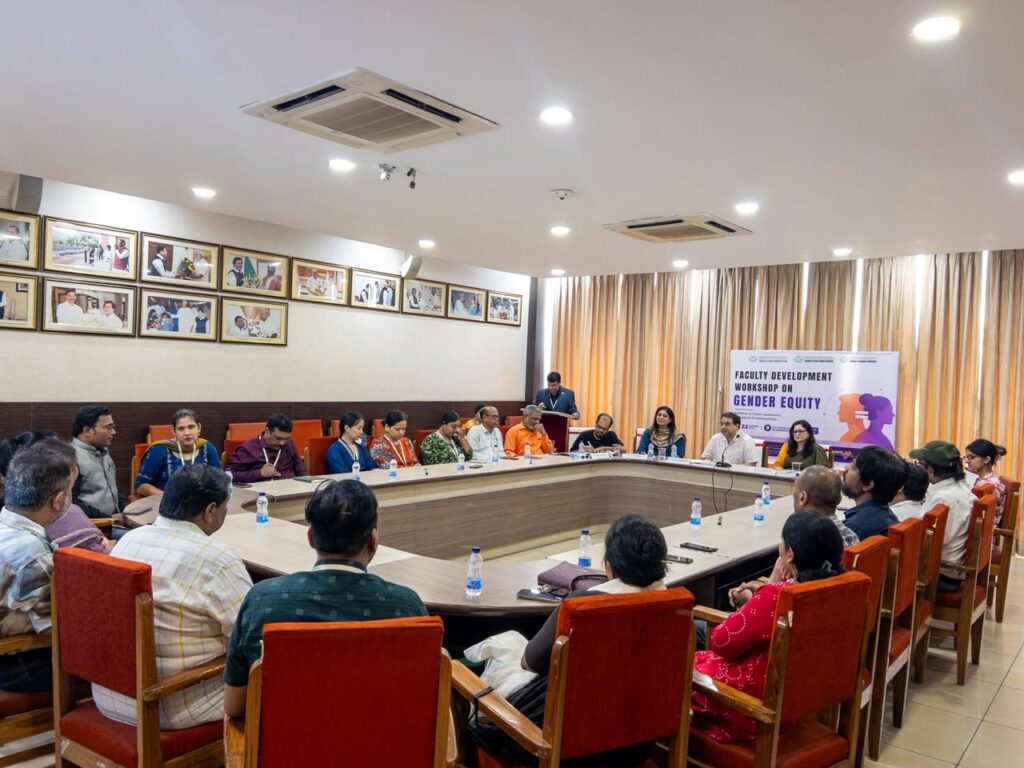
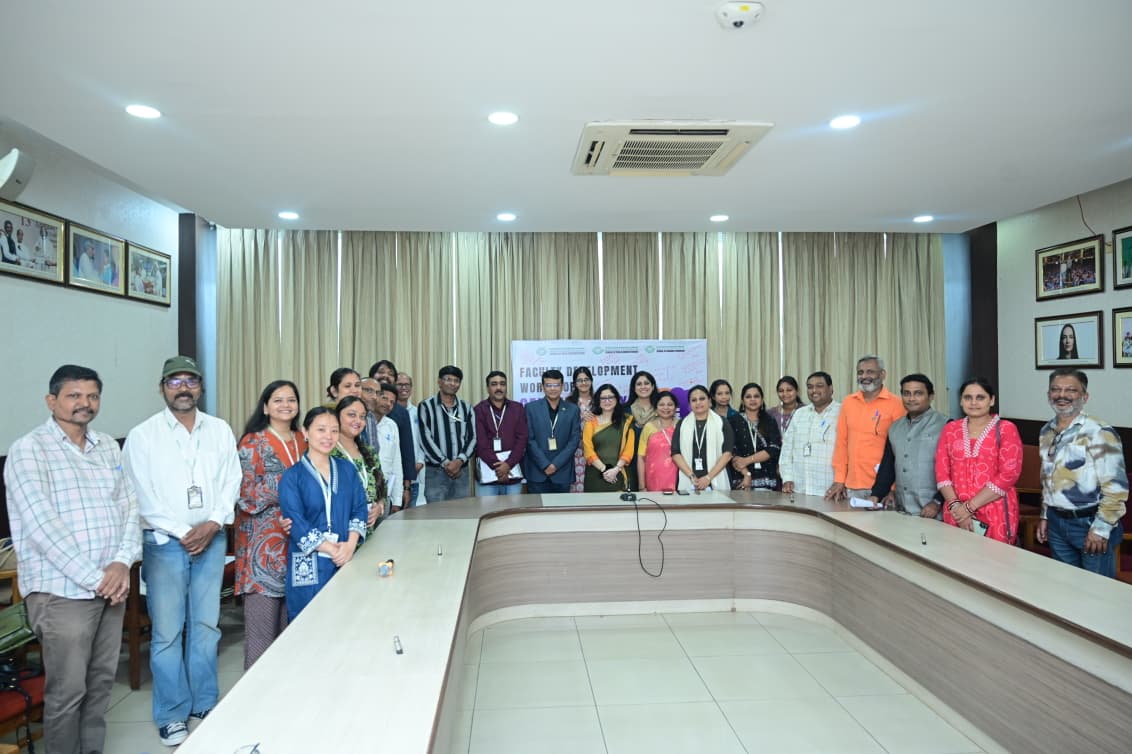
School of Mass Communication (KSMC), KIIT Deemed to be University organized a Faculty Development Workshop on Gender Equity on 22 August 2026 at Campus 6. Held in collaboration with TalentNomics India (TNI), the theme of the workshop was “Building Inclusive Classrooms, Workplaces & Communities.” It brought together Prof. Debashis Bandyopadhyay, Pro-Vice Chancellor, KIIT – DU, Dean, Heads and faculty members of the three schools of Campus 18 – School of Film and Media Sciences (KSFMS), School of Fashion technology (KSFT) and KSMC. The participants engaged in meaningful conversations on gender equity and inclusion in contemporary society. The workshop was convened by Ms. Ruby Nanda, Assistant Professor, KSMC, who was instrumental in organizing the event in collaboration with Ms. Disha Tripathy, Program Manager, TNI.
Delivering the welcome remarks, Dr. Rajeev Kumar Panda, Dean, KSMC, KSOFT and KSFMS, began by drawing a distinction between equality and equity, explaining that while equality focuses on creating equal opportunities, equity is about creating the necessary space and conditions for everyone to thrive. Dr. Panda highlighted the significance of the conversation, particularly in the context of the signing of an MoU with TalentNomics India on the eighth day of Navrati, a day that celebrates the power of women. He emphasized that such symbolism must be translated into meaningful action. Referring to the celebration of the birth anniversary of the Founder, Prof. Achyuta Samanta’s mother and his book, “My mother, my hero,” he noted that qualities such as courage, leadership, resilience, greatness and the pursuit of dreams have no gender. Appreciating the strength and achievements of women, Dr. Panda observed that gender equity is no longer merely a concept discussed in classrooms, conferences and workshops, but a reality increasingly visible in society. He highlighted the growing presence of women in workplaces and in spaces where society once told them they did not belong. He further cited the example of KISS, where women constitute approximately 70 percent of its 40,000 students, as an illustration of how gender equity can be actively practiced.
Concluding his remarks with a thought-provoking reflection, Dr. Panda stated, “The question should not be: Can women compete with men? But rather, why should we even ask that question?” He emphasized that equity is not about replacing one winner with another, but about ensuring that everyone has a fair starting line and the opportunity to succeed.
Following Dr. Panda’s address, Prof. Debashis Bandyopadhyay, Pro-Vice Chancellor, KIIT-DU, began his address with the statement, “I am not here to give you a direction, I am a learner,” highlighting that despite continued efforts and initiatives towards gender equity, there remains considerable scope for improvement in addressing inequalities that persist in society. Referencing the work of Moroccan sociologist and feminist writer Fatima Mernissi, Prof. Bandyopadhyay discussed how social conventions continue to regulate women’s bodies and choices, even within societies that consider themselves liberal. He observed that such norms often become internalized over time, unconsciously shaping individual behavior, and emphasized the need to recognize and question these conventions rather than accepting them as natural or inevitable. He further noted that discussions on gender equity and equality often focus on ethical and legal concerns, fairness and impartiality. However, he encouraged participants to develop a deeper understanding of equity through their own experiences, feelings and philosophies. Emphasizing the philosophy behind gender equity, he highlighted the importance of equality, respect and individuality in relationships. Referring to D. H. Lawrence, Bell Hooks and Rabindranath Tagore, he stressed that genuine love cannot coexist with violence or possessiveness and emphasized the need to respect individual differences. Prof. Bandyopadhyay spoke on the non-binary notions of individual talent and heroism, and stated that talent and achievement should not be defined or limited by gender. He highlighted three major events; World War I, World War II and the COVID-19 pandemic, that demonstrated the practical need for gender equity. From nurses working during wartime to present day women in the remote areas of the Sundarbans working in deep swamps to care for their families despite the risks of diseases, women have consistently demonstrated their capabilities in domestic life, society and sports.
Towards the end of the inaugural ceremony, the faculty participated in the felicitation of the guests, followed by a brief introduction by Ms. Lavang Khare, Strategic Communications Advisor, Adfactors PR, Advisor TalentNomics India. She shared her life experiences and expressed her gratitude for being part of the workshop, mentioning how she feels like she is part of KIIT through her collaboration with KSMC for three years now. Ms. Ina Wadhwa, Program Director, TalentNomics India, shared words of gratitude, thanking Ms. Ruby Nanda for her coordination and Dr. Rajeev Kumar Panda for supporting the initiative and explained the purpose of this workshop, stating that it was designed to create an opportunity for reflection and meaningful conversation on gender equity and inclusion. The inaugural ceremony concluded with a vote of thanks from Dr. Bidu Bhusan Dash, Associate Professor and Head, KSMC who expressed his gratitude for the powerful and enlightening initiative.
TNI organized engaging activities that witnessed active participation from all the faculties in the form of discussion, experience sharing, filling exercise handouts, and role-plays. The day concluded with meaningful insights and positive takeaways accompanied by a promise for more such initiatives to achieve the dream of an ‘equiverse – an universe where gender equity is a norm.’