– by Shuvai M. Shumba, BCJ, 5th Semester
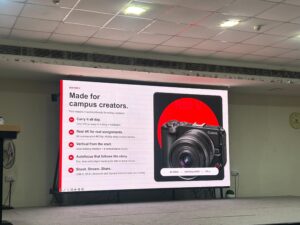
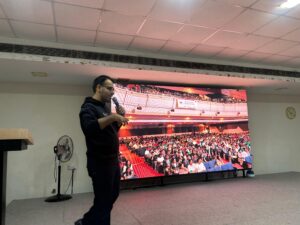
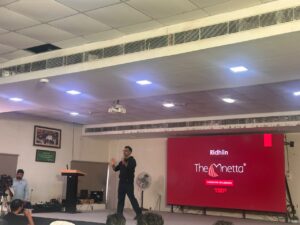
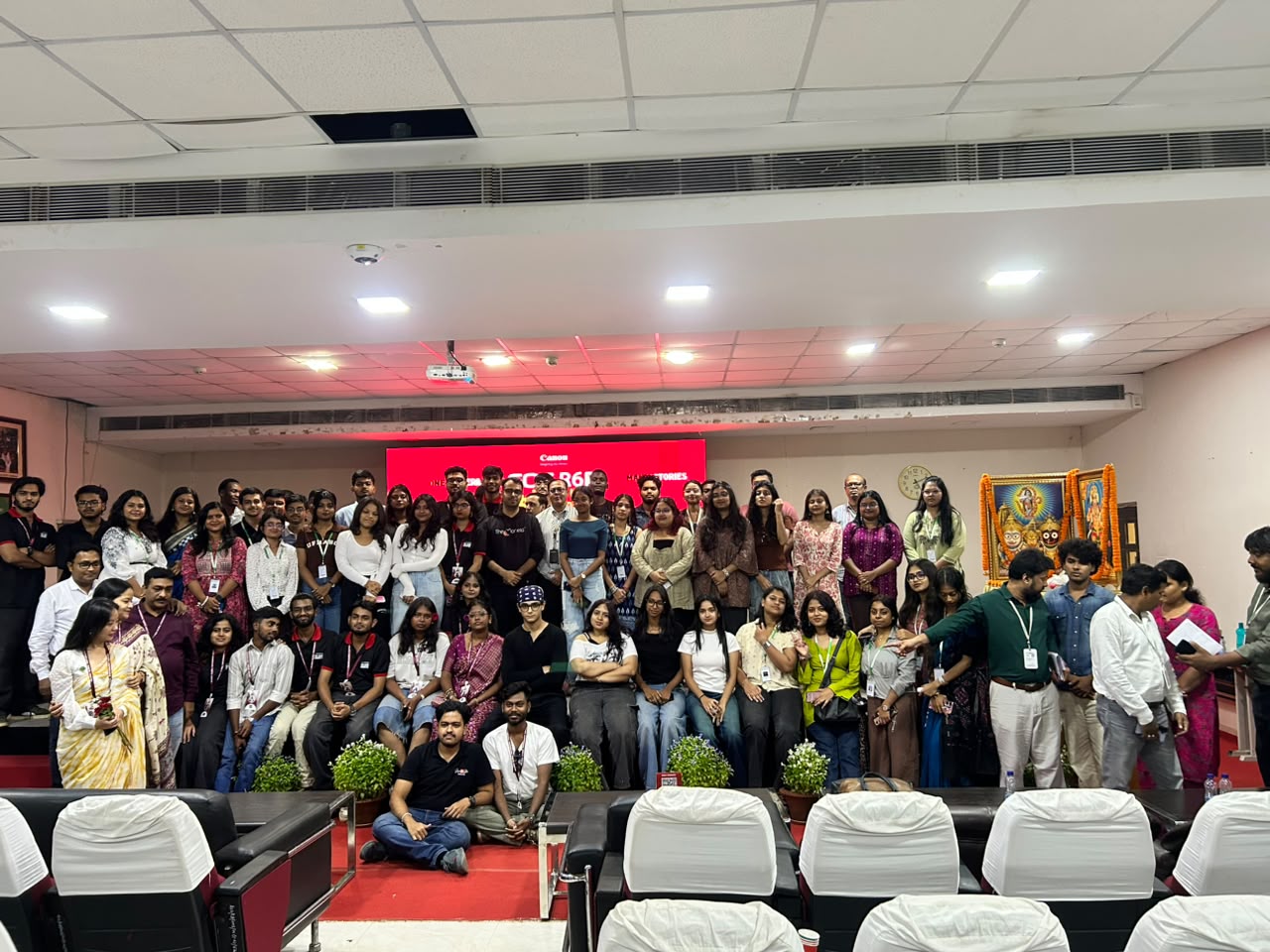
The Campus 18 Auditorium witnessed an engaging session on photography and digital storytelling as the School of Film and Media Sciences (KSFMS), KIIT Deemed to be University, organised a workshop on Photography, Content Creation and Visual Storytelling, powered by Canon India. The workshop brought together students from the School of Mass Communication (KSMC) and the School of Fashion Technology (KSFT), offering them an opportunity to learn from Ridhiin Pancchmatia, Founder of The Moneta, Canon India EOS Influencer, TEDx Speaker and Canon Photo Mentor, through interactive discussions, practical demonstrations and video presentations.
With experience covering more than 1,600 events across 21 countries, Mr. Pancchmatia introduced students to the opportunities available in the creative industry. To demonstrate the global reach of photography, he shared examples of internationally recognized festivals that he has documented, including Tomorrowland in Belgium, the largest music festival in the world, which he has photographed since 2015, Sunburn Festival in India, the largest music festival in Asia, which he has covered since 2011, Parookaville in Germany; and Storm Festival in China.
The workshop focused primarily on content creation and the factors that motivate learners to pursue careers in the creative industry. According to Pancchmatia, money, time, and fame are three major factors that influence career choices among creative professionals. He explained that understanding these factors allows individuals to set realistic goals and establish long-term career plans.
A significant portion of the workshop was dedicated to portfolio development. He explained that a portfolio is not merely a collection of photographs but a representation of a creator’s professional identity. He divided a successful portfolio into three essential components: money, technical skills, and storytelling.
While addressing the financial aspects of photography, Pancchmatia stressed the need for photographers to understand the commercial value of their work and view photography as a profession rather than merely a hobby. He also highlighted the importance of how photographers present themselves, reminding students that “the way you present yourself to future clients matters,” and emphasising the role of professionalism and personal branding.
The technical component of the workshop introduced students to various photographic techniques. One of the most interesting concepts discussed was light painting, a technique that uses long exposure to capture moving light while keeping the camera stable.
The final component of the portfolio focused on storytelling, which the speaker described as one of the most powerful elements of photography and filmmaking. Through examples from cinema and content creation, he explained that photographs and videos should communicate emotions and create meaningful connections with audiences. He reinforced this idea by stating that “cinema is not about equipment, specifications, or features. It is about making people feel something.”
Students were further introduced to a simple storytelling framework consisting of character introduction, problem identification, struggle, and resolution. They were encouraged to determine the purpose of every image before pressing the shutter button and to approach every project with a clear narrative in mind. To make the workshop more interactive, he incorporated short video demonstrations throughout the session. Every major concept was supported by visual examples that allowed students to connect theoretical knowledge with practical applications.
Throughout the workshop, Pancchmatia motivated participants to remain committed to learning and to view challenges as opportunities for growth. He encouraged students by saying that “just because you are bad at something now does not mean that you cannot make it,” reminding them that persistence and continuous practice are essential for success in the creative industry.
Before the conclusion of the event, students were introduced to #IndiaInMotion, a photography competition designed to encourage photographers to capture India’s dynamic culture through cinematic storytelling. The campaign was introduced with the message, “India isn’t just seen, it’s felt in motion. From fleeting glances to grand celebrations, every moment carries a rhythm of its own”. The competition is structured in two stages. In the first round, 12 winners would receive the EOS R6 V camera. In the second round, one grand winner would receive ₹10 lakhs to produce a passion project using the EOS R6 V. The initiative is an opportunity for aspiring photographers to showcase their creativity while gaining access to professional equipment and industry recognition.
The workshop successfully combined theory, practical demonstrations, and professional experience to provide students with a comprehensive understanding of photography, content creation, cinematography, and storytelling. Through his experiences of covering more than 1,600 events across 21 countries, Ridhiin Pancchmatia demonstrated the global possibilities available within the creative industry. The use of short videos, real-world examples, and interactive discussions created an engaging learning environment for students to develop their technical skills, strengthen their portfolios, and pursue creative careers with greater confidence and purpose.